


 CONECTARSE
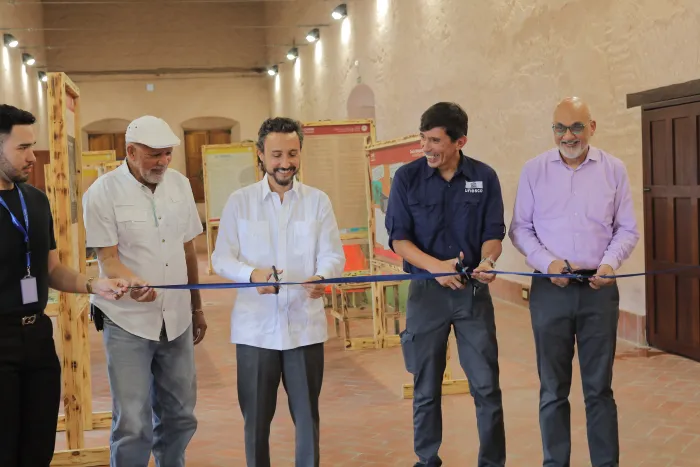
Panama strengthens access to its underwater cultural heritage with the exhibition "Caribe: Mar y Legado" (Caribbean: Sea and Legacy)
UNESCO and the Ministry of Culture of Panama, with the support of AECID, inaugurate an exhibition on underwater cultural heritage in the Real Aduana de Portobelo.
Underwater cultural heritage is made up of artifacts and sites that evidence human activity and are found totally or partially submerged under water. By their nature, underwater archaeological sites are difficult to perceive with the naked eye, so their protection, research, and enhancement require a differentiated approach. Nevertheless, it is a cultural legacy that reflects the historical link between human development and the oceans, rivers, and lakes.
Within the framework of the International Decade of Ocean Science for Sustainable Development (2021-2030), UNESCO and the Spanish Agency for International Development Cooperation (AECID) have launched the multinational project "Improving the protection and access to underwater cultural heritage in the Caribbean." In Panama, this project has enabled various actions aimed at offering the public greater knowledge and awareness of the value of cultural assets lying under the waters of the Panamanian Caribbean.
This project allowed for the implementation of a training program aimed at youth in the province of Colón, with the purpose of strengthening their knowledge on Caribbean maritime history, underwater archaeology, cultural rights, and the importance of protecting heritage hand in hand with local communities. As a result of this process, the youth network known as "Red Baluarte: Centinelas del Caribe" (Bulwark Network: Sentinels of the Caribbean) was formed. Read more