login
login
Into the Deep: Help Decode Ocean Mysteries from Your Laptop
This story is a part of the GenOcean campaign — an official Ocean Decade campaign showcasing Decade Actions, collaborating organizations and ocean leaders that focus on youth and citizen science opportunities to help anyone, anywhere be the change the ocean needs.
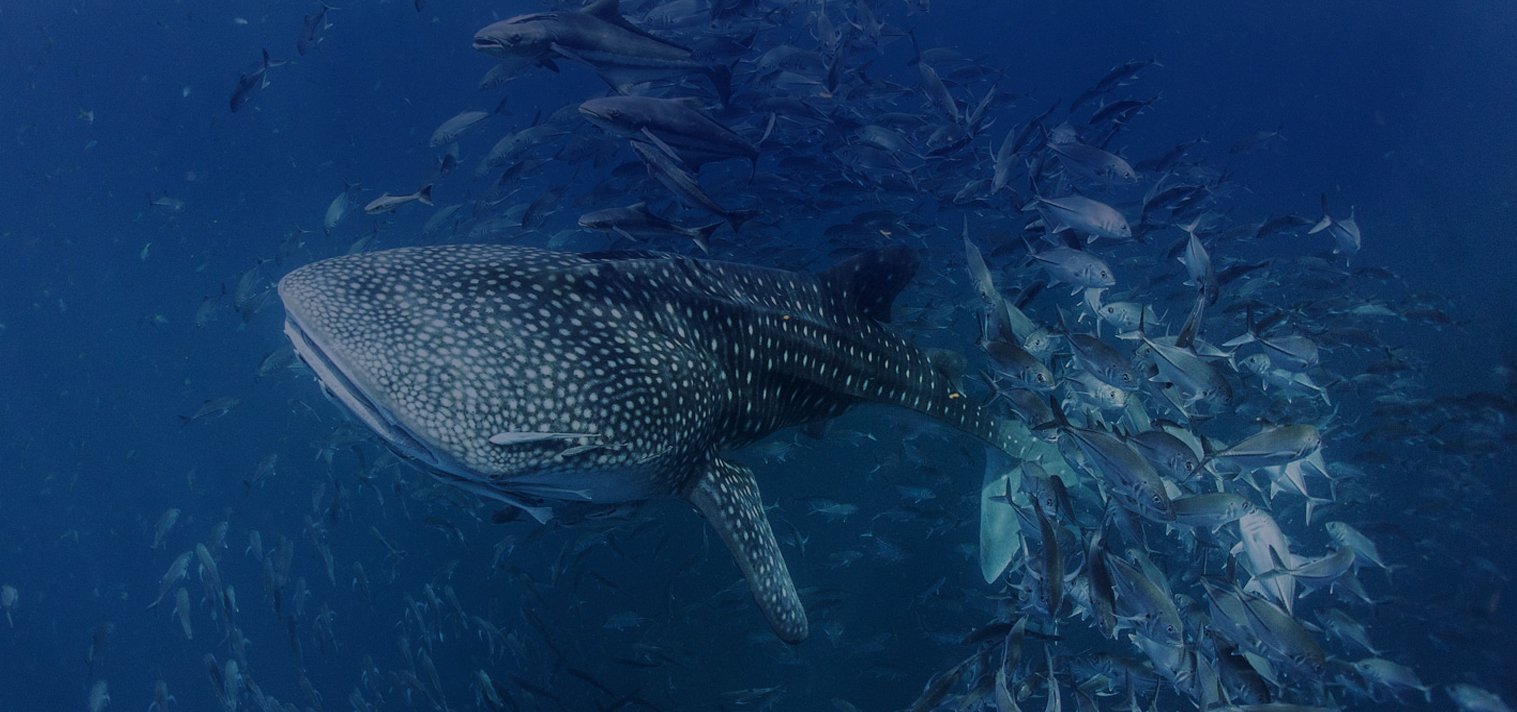
Imagine taking a trip to the deepest depths of the ocean, discovering glowing fish and translucent crabs, all from the comfort of your couch. Into the Deep takes you on this trip and provides the tools for anyone to contribute to real science projects by identifying and classifying marine creatures in photos and videos of deep-sea environments.
“With this project we bring the unknown world of the ocean directly to the laptops of the users, regardless of whether they live on the coast or inland,” says Dr. Caroline Johansen, Head of Science Communication at Interchange Non-Profit gUG and Project Manager of Into the Deep.
14 March 2025
What is Into the Deep?
Into the Deep is an online learning and citizen science platform that invites participants, or citizen scientists, from around the world and with any level of science experience, to contribute to marine image analyses that feed into ongoing research projects. The platform hosts learning modules and a tailored participatory science tool around four distinct deep-sea marine habitats and the impact humans have had on them. By analyzing photos and identifying sea life, substrate, fish species and more, participants become empowered citizen scientists and contribute to the science we need for the ocean we want.

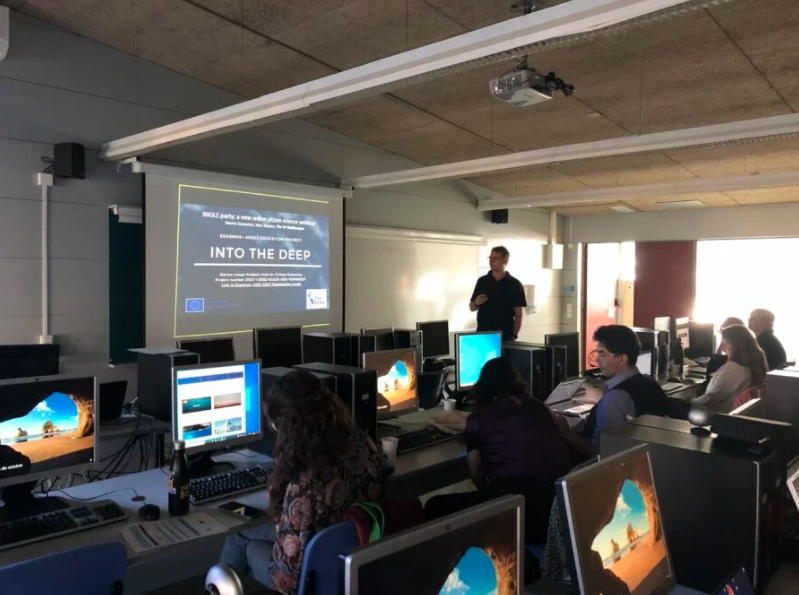
Dr. Tim Nattkemper, head of the Biodata Mining group at Bielefeld University and partner and developer of Into the Deep's Biigle Party platform, presents at an Into the Deep training event in Vilanova i la Geltru, Spain.
How does it work?
Participants use a new web-based image analysis tool, known as BiiGLE PARTY, to make species observations in seafloor images. Results from the project show that users’ observations successfully feed into ongoing scientific research by ‘teaching’ machine learning tools to observe specific indicators amongst the thousands of images now collected by marine cruises and stationery marine observation modules.
“To participate in Into the Deep, you just need access to a laptop which allows us to break through accessibility barriers such as a person’s location or physical abilities,” explains Johansen.
While contributing to science research, users gain a deeper understanding of marine conservation policy and agency through their participation. Marine scientists also gain a new understanding of how to communicate their research goals to the communities around them and understand the potential value of citizens as a resource. The outputs have also started to encourage more collaborations to protect our valuable marine ecosystems.

Participants get hands-on guidance at the first test run of Into the Deep in Vilanova i la Geltru, Spain.