


 LOGIN
LOGIN
Planning together for ocean resilience in the Wider Caribbean and Latin America
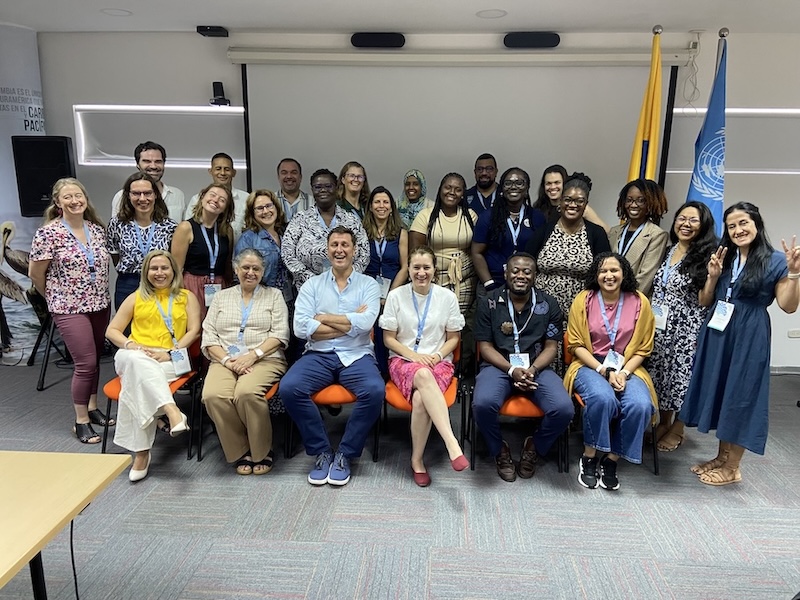
From 11-13 May 2026, 25 Marine Spatial Planning (MSP) representatives and practitioners from across the Wider Caribbean and Latin America regions convened at the Institute of Marine and Coastal Research (INVEMAR) in Santa Marta, Colombia. The gathering marked a significant milestone in regional governance and capacity development: the second meeting of the IOCARIBE MSP Task Team as well as training on ‘Biodiversity Inclusive and Climate-Smart MSP’, delivered by the MSPglobal Programme of the Intergovernmental Oceanographic Commission (IOC) of UNESCO
15 mai 2026
Bringing the MSP Task Team together – in person for the first time
While the first IOCARIBE MSP Task Team meeting was held virtually, this second meeting brought representatives physically together –a moment of particular significance for a network built on regional collaboration. For many participants, it was the first opportunity to meet face-to face with counterparts from IOCARIBE Member States and regional organizations working together toward shared ocean governance goals.
The opening plenary session was co-hosted by INVEMAR and IOCARIBE, who warmly welcomed all the attendees. A second session was followed, during which representatives from UNOPS and IOCARIBE presented their ongoing efforts in MSP and marine conservation across the region, highlighting synergies and shared priorities.
The third and fourth sessions were delivered by each task team member who presented the MSP activities underway within their country or regional context. This exchange offered a comprehensive overview of where the region stands, and the diverse pathways being pursued to advance ocean planning.
The meeting concluded with a structured discussion on MSP capacity development gaps and priorities that IOCARIBE Member States across the Wider Caribbean and Latin America need to address in the forthcoming years.


© INVEMAR, 2026
Integrating biodiversity and climate-smart principles in marine planning.
On May 12 and 13, the MSPglobal team –with the support of the OceanTeacher Global Academy (OTGA), INVEMAR and IOCARIBE– delivered the first-ever in-person training on ‘Biodiversity inclusive and Climate-smart MSP’ in the region. Through a combination of theoretical and hands-on practical exercises, participants enhanced their understanding on how to integrate biodiversity and climate considerations across all phases of the MSP cycle, while advancing their processes inclusively.
The sessions explored the interconnectedness of marine ecosystems, climate pressure, and human well-being, while also addressing practical applications of ecosystem-based approaches (EBA), the implementation of existing regional and global frameworks, among other topics. Participants analyzed spatial information to develop strategic scenarios aimed at supporting biodiversity recovery and climate resilience, and identified actionable steps to implement tailored recommendations in specific contexts –overcoming existing gaps or barriers through and targeted actions.

© UNESCO-IOC, 2026
The training’s theoretical content drew directly from MSPglobal's International guidelines on Biodiversity inclusive principle (Volume 2) and Climate-smart principle (Volume 3), as well as the recently launched online course on ‘Biodiversity inclusive and climate smart MSP’, available in English and Spanish languages through OTGA.
Why integrating biodiversity and cliate-smart principles into MSP matters?
As marine and coastal areas are facing increasing pressures from biodiversity loss, climate change, and competing human uses, MSP has emerged as a key instrument to addressing these challenges in an integrated, ecosystem-based, and participatory manner. However, effectively integrating biodiversity conservation, climate adaptation and mitigation, and inclusive governance principles and translating global commitments –including those under the Kunning-Montreal Global Biodiversity Framework and the Paris Agreement– into MSP processes remains a significant capacity gap in many regions, including Latin America and the Caribbean.
This regional training directly responds to that need. By strengthening technical and practical capacities of pratitioners, it enables countries to operationalize biodiversity and climate commitments through MSP at national and sub-national levels, helping to ensure that the MSP processes of tomorrow are resilient, inclusive and grounded in the best available science.